Perthshire gamekeeper's DIY project helps rare birds
Published 27th March 2026.
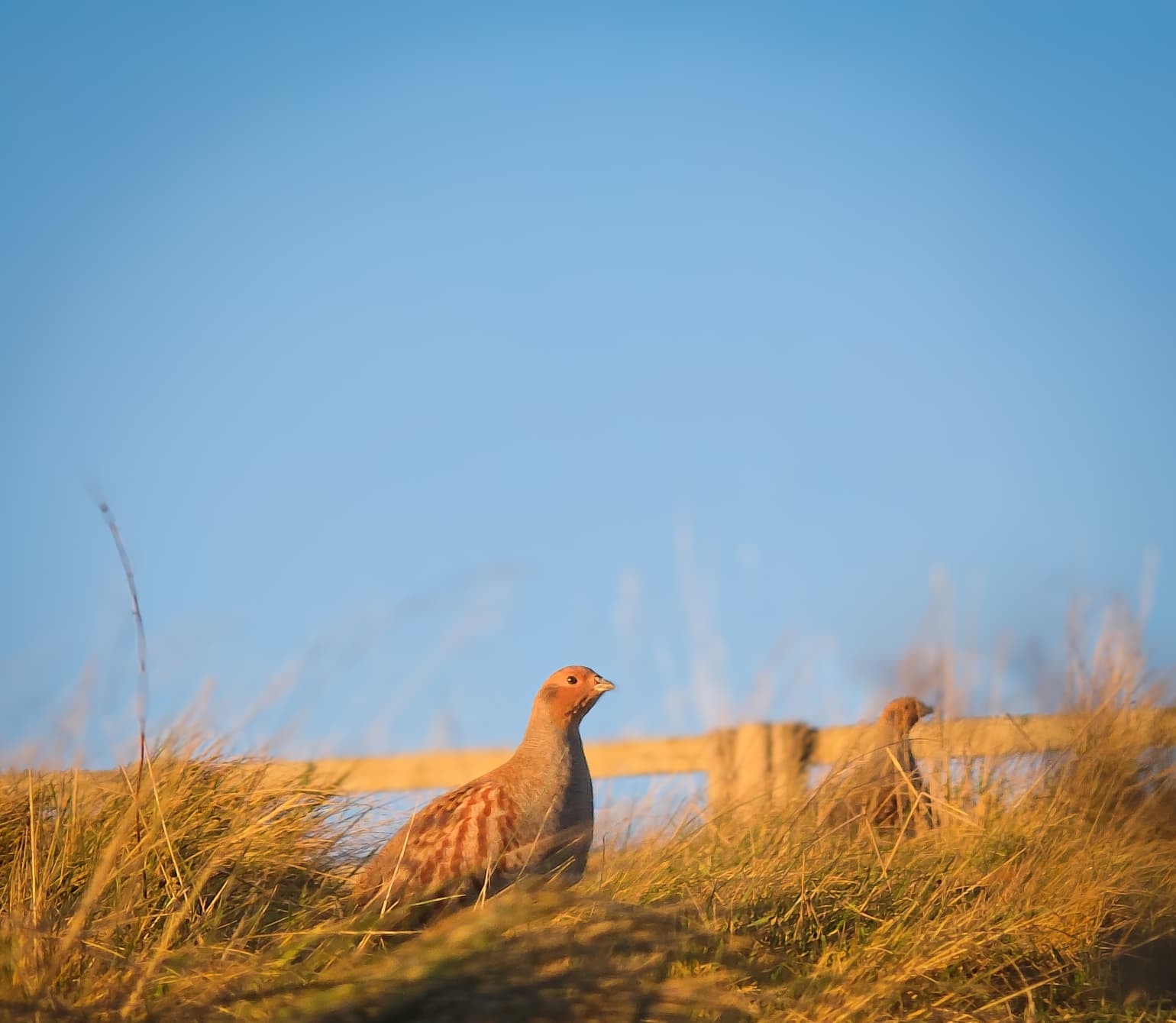
A Perthshire gamekeeper who has self-funded his own DIY project to help save one of Britain’s rarest birds is celebrating record winter survival on his rearing grounds.
Josh Burton, a member of The Scottish Gamekeepers Association, uses off-cuts from building projects and sawn-down berry barrels to help red-listed Grey Partridge.
The species was once common on farmland and on moorland fringes in the UK but their populations have shrunk alarmingly, declining over 90% in the last few decades.
However, despite one of the wettest winters of recent times, Josh’s home-made conservation project is beginning to click, with a 79% success rate in winter 2025.
Of the 104 birds he released last year (stemming initially from just a few eggs), 82 survived the winter and are ready to pair again, bolstering the breeding population.
“I think people maybe thought that grey partridge would always just be here, with us. In many ways, they are probably the victims of apathy,” he says.
“When I started rearing them, something just got under my skin and that was it. It became a passion.”
Conservation for conservation's sake
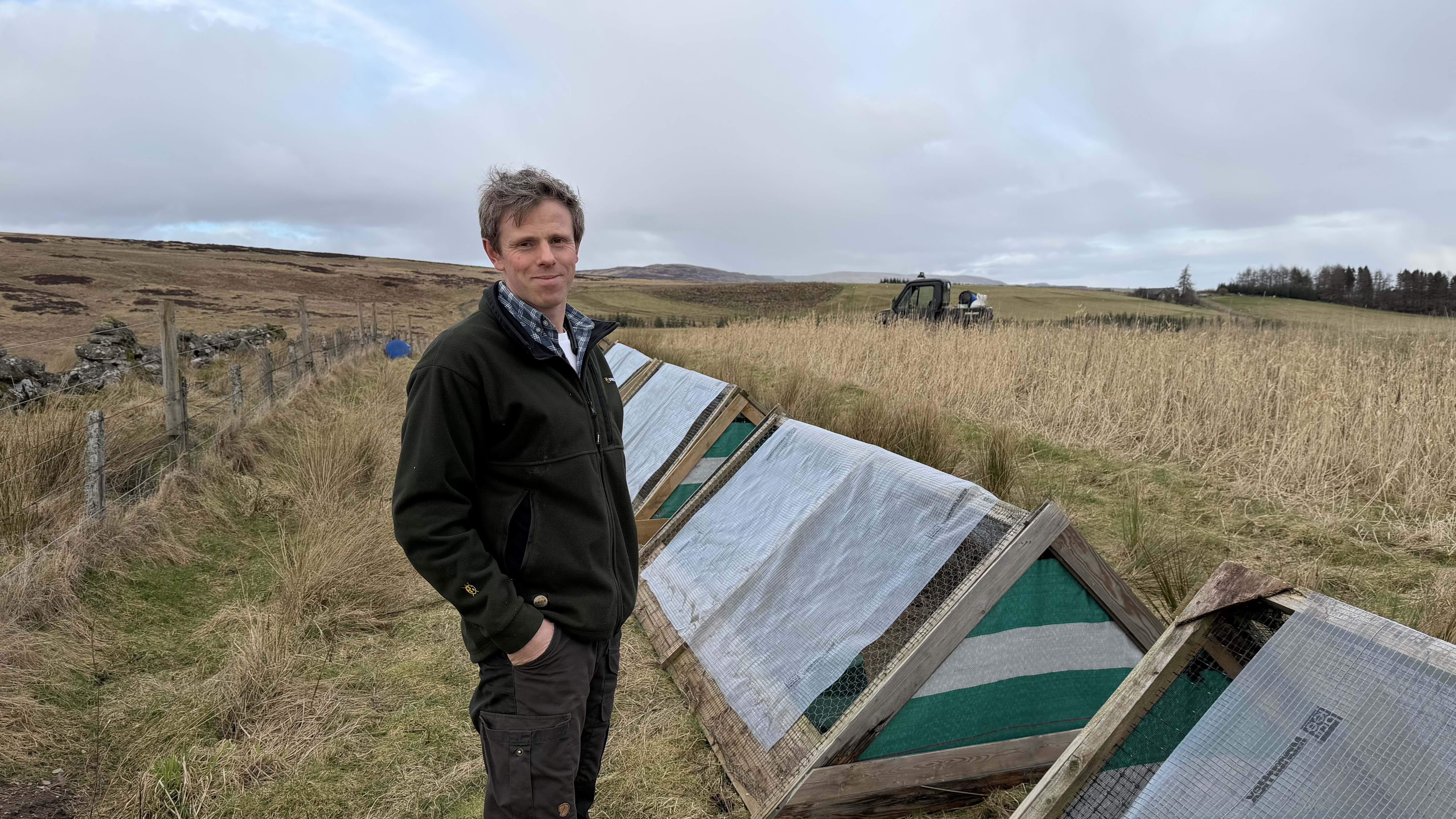
Josh first started rearing the birds as a ‘hobby’ around 10 years ago when he ordered some eggs from an approved wildlife supplier.
Using a broody bantam (a highly maternal small chicken) to hatch and rear the young, his initial forays showed success and he decided to continue, funding his own self-designed project.
Reading as much available source material as possible, he refined his rearing methods to grow the scheme re-modelling donated items to help create good breeding conditions.
Josh constructs specially designed coops to enable pairs to breed safely in the open before taking a percentage of the eggs for next year’s breeding stock.
These are hatched, again with the motherly help of a bantam.
The remainder are reared in natural parent groups, in the coops, before being released into the wild.
While most traditional conservation work in the UK is carried out by charities receiving public finance or donations, Josh has re-defined sustainability.
His shelters are built from off-cuts from a relative’s construction project, and his feed hoppers are cut-down barrels from a supportive farmer.
“It’s just something I’ve wanted to do,” he says.
Survival Quest

When the young emerge, their survival journey is far from over.
Grey Partridge are highly vulnerable to ground and aerial predation and Josh legally manages predators, using a General Licence, as a trained wildlife manager.
He controls between 30 and 40 foxes per year, to keep the young safe as they grow.
He also carries out legal mustelid control through trapping, as well as corvid management.
“Grey Partridge rearing involves the epitome of good game management,” says Josh.
“We’ve had a pretty awful winter. I honestly thought we’d maybe have a survival rate of 20%, not a loss rate of 20% but the birds have thrived. There were several coveys that didn't lose a single bird.”
'Working conservationist'

Scottish Gamekeepers Association Chairman Alex Hogg MBE says Josh’s work is testimony to the role gamekeepers and land managers can play in species recovery.
“Josh is an example of a working conservationist,” he said.
“Gamekeepers and farmers are helping protect species every day. They are not the types to seek limelight, but they offer so much to the countryside.”